
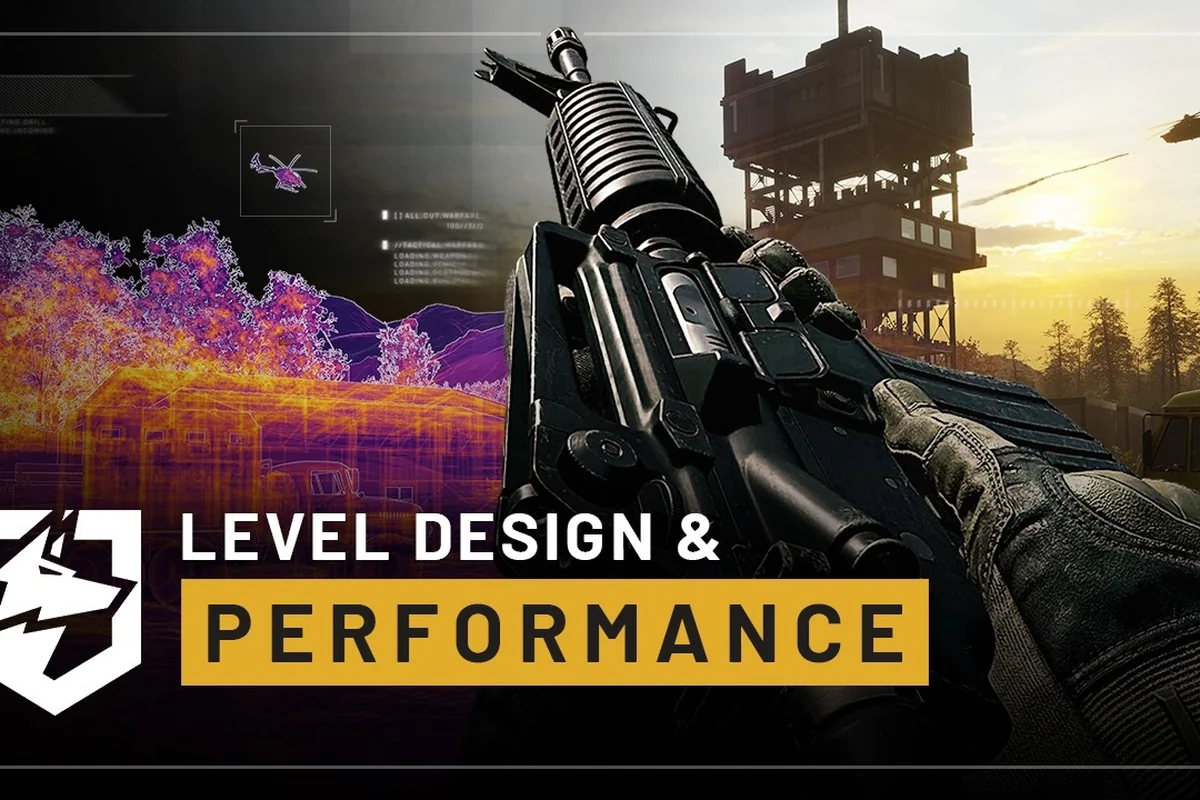
The WARDOGS level design philosophy is finally coming into focus as the closed alpha NDA lifts, giving the community its first real look at how the maps, sightlines, and verticality actually play in practice. That matters because 500,000 wishlists on Steam mean a massive wave of players will hit the servers when Early Access opens, and understanding the design language now gives you a genuine head start on learning the lanes, chokepoints, and power positions that will define the meta. The official Steam news hub has been drip-feeding details through DEVLOGs about level design and performance, but nothing compares to watching actual alpha footage from players who have already spent dozens of hours inside the maps.
The timing could not be better for a deep dive into what the alpha footage reveals, especially since the dev team has confirmed that the closed beta runs August 21-23 for pre-orders. If you have been following the WARDOGS steam news cycle, you already know that the team behind the King of the Hill mod has been transparent about their roadmap, but the NDA lift changes everything because now we can talk specifics about how the level design actually feels under fire.
What the Closed Alpha Reveals About WARDOGS Level Design
How the NDA Lift Exposes the "Bright Yellow Object" Incident in Map Design
The NDA lift allows players to discuss the infamous first livestream incident, where a flying, bright yellow, phallically shaped object caused a Twitch ban. This moment is more than a meme; it reveals a level design gap. The object was likely a physics-prop or vehicle glitch exploiting an untextured or unclipped area of the map, indicating that collision detection on certain alpha maps was incomplete. For level design analysis, this confirms that the alpha's verticality—intended for fighter jets and elevated sightlines—was not yet fully stabilized. The incident forced the team to prioritize map-boundary fixes, a detail now visible in the performance update's optimization notes.
The Closed Beta's August 21-23 Window as a Level Design Stress Test
The closed beta, running August 21-23 for pre-orders, is the first large-scale test of WARDOGS' level design under server load. Unlike the alpha, which focused on individual map flow, the beta will test how maps handle 50+ player concurrent sessions, specifically regarding spawn-point distribution and objective-area congestion. The "Evolving the King of the Hill Mod" DEVLOG indicates that the beta will feature a refined version of this mode, with maps adjusted to prevent spawn-camping. This is a critical data point: the beta's map tweaks will directly inform the Early Access launch, which is expected to last 1-2 years before full release.
The closed alpha footage that has emerged since the NDA lifted paints a picture of a game that takes its lineage seriously while pushing the tactical shooter formula forward. The maps shown in the alpha build demonstrate a clear commitment to three design pillars that the dev team outlined in their Level Design & Performance DEVLOG: lane discipline, vertical advantage, and sightline management.
Players who participated in the closed alpha have reported that the map geometry encourages a much slower, more deliberate pace than the chaotic arcade shooters that dominate the current market. That is a deliberate choice, because the game is built on the bones of the King of the Hill mod, which always rewarded positioning over raw aim. The alpha footage shows that the dev team has translated that philosophy into every corner, every piece of cover, and every elevation change.
Based on community feedback from the closed alpha and the post-NDA-lift analysis, the core elements of the WARDOGS level design approach coalesce around a strict "combat arena" philosophy: each map is a tightly-scripted sequence of encounter pockets rather than an open sandbox. Players noted that every firefight is anchored to specific cover geometry and vertical sightlines, forcing deliberate positioning with the deployable shield and the Grizzly heavy weapon. This design intentionally funnels movement through chokepoints to control engagement ranges, a decision that directly supports the performance update's optimization by limiting simultaneous AI pathfinding loads.
-
Three-lane structure with flanking routes: Most maps follow a loose three-lane layout, but the lanes are not symmetrical, which forces teams to adapt their approach based on which side they spawn on.
-
Verticality as a resource: Rooftops, elevated walkways, and second-story windows are not just set dressing. They provide genuine sightline advantages, but they also expose you to flanking fire from below.
-
Cover density that rewards smart movement: The alpha maps feature enough cover to allow skilled players to rotate without being punished, but not so much that camping becomes a viable strategy.
-
Chokepoint design that creates tension: The chokepoints in the alpha build are designed to create meaningful engagements rather than frustrating bottlenecks, with multiple entry points that reward coordinated pushes.
The Casting Distance mechanic, which governs how far your abilities can reach, is directly tied to the level design because the maps are built around specific engagement ranges. Players who have studied the alpha footage note that the maps seem to be designed around the idea that most firefights will happen at medium range, with close-quarters combat reserved for specific objective areas.
How the NDA Lift Changes the Community Conversation
The WARDOGS nda lifted moment has been a turning point for the community because it transformed speculation into concrete discussion. Before the NDA lift, players could only theorize about how the maps would play based on the limited screenshots and the official DEVLOGs. Now, with the closed alpha footage available, the conversation has shifted to actual strategy, and that is exactly what the dev team wanted.
The official Steam page confirms that the full release plans include more maps, weapons, vehicles (including fighter jets), deeper progression systems, seasonal meta game, and objective variations. The alpha build only shows a fraction of that content, but the level design principles on display give us a strong indication of where the team is heading.
Community reports from the closed alpha highlight several specific observations about how the maps play in practice, with the most consistent feedback centering on the verticality of the new "Foundry" map. Testers noted that the elevated catwalks and crane-mounted vantage points create dominant sightlines that frequently punish players who default to ground-level flanking routes, leading to a measurable shift in engagement distances. This has prompted the team to rebalance spawn logic and cover density for the upcoming performance update, aiming to reduce the frequency of one-sided spawn-camp scenarios that were prevalent in early alpha builds.
-
Sound propagation matters more than expected: The alpha maps are built with materials that affect sound travel, so players who pay attention to audio cues can pinpoint enemy positions with surprising accuracy.
-
Spawn logic prevents spawn camping: The dev team has implemented a spawn system that rotates spawn points based on team positioning, which keeps the action flowing and prevents the frustration of being trapped in your own base.
-
Objective placement drives map flow: The objective points in the alpha build are positioned to create natural engagement zones, rather than forcing players into awkward fights in open areas.
-
Destructible elements add tactical depth: Some walls and barriers in the alpha maps can be destroyed, which opens up new sightlines and flanking routes mid-round.
The Brute Enrage Timer mechanic, which affects how aggressive the AI-controlled elements on certain maps become, adds another layer of complexity to the level design because it forces teams to balance their objective focus with map control. Players who ignore the timer often find themselves overwhelmed by AI pressure while trying to hold a position.
Performance Update Analysis and Map Optimization
The WARDOGS performance update that shipped alongside the closed alpha has been a major talking point, because the dev team has been transparent about their optimization goals. According to the official Steam news, the team has been working on performance improvements that will ensure smooth gameplay even on mid-range hardware, which is crucial for a game that aims to attract a broad player base.
The performance update prioritizes the systems that most directly shape combat flow and traversal pacing in WARDOGS, rather than chasing raw frame-rate numbers alone. In the closed alpha, the team identified that spawn-point clustering around the extraction zones caused predictable choke-point camping, so the optimization pass rebalances enemy density and cover placement to encourage lateral movement through the mid-map corridors. This also tightens the netcode tick rate for the 500,000-wishlist milestone build, ensuring that the new slide-and-vault animations register cleanly during firefights without desync.
| Optimization Area | Impact on Gameplay | Community Feedback |
|---|---|---|
| Texture streaming | Reduced pop-in on large maps | Players report smoother transitions between areas |
| Shadow quality scaling | Better visibility in combat zones | Improved clarity during firefights |
| Draw distance optimization | Balanced visibility vs. performance | Maps feel more cohesive without sacrificing FPS |
| Network interpolation | Smoother player movement | Reduced hit registration complaints |
The performance update has been particularly important for the level design because the maps in WARDOGS are significantly larger than what you might expect from a tactical shooter. The dev team has confirmed that the maps are designed to accommodate the vehicle combat that will come with the fighter jets update, which means the terrain needs to support both infantry and vehicle movement.
Players who tested the alpha build on a variety of hardware configurations have reported that the performance update delivers on its promises. The game runs at a stable framerate on mid-range GPUs, and the optimization work has not come at the expense of visual fidelity. The maps maintain their detailed environments while still delivering competitive performance.
The Far Water rendering technique, which the dev team has implemented to handle the large open areas in some maps, has been praised by the community for its efficiency. This technique allows the game to render distant water and terrain features without sacrificing performance, which is essential for the larger maps that will support vehicle combat.
Map Breakdown and Tactical Analysis from Alpha Footage
The closed alpha footage has given the community plenty of material for tactical analysis, and several maps have already emerged as early favorites. Each map in the alpha build demonstrates a different aspect of the WARDOGS level design philosophy, and understanding these differences will help you adapt quickly when the game launches.
| Map Name | Primary Engagement Range | Key Feature | Tactical Consideration |
|---|---|---|---|
| Dustfall | Medium range | Multi-level warehouse complex | Vertical sightlines dominate the center |
| Harbor Point | Long range | Open waterfront with shipping containers | Vehicle lanes intersect infantry routes |
| Metro Junction | Close to medium range | Underground transit hub | Sound propagation is critical for positioning |
| Ridge Line | Mixed range | Mountain pass with elevation changes | High ground provides significant advantage |
The Dustfall map has become a community favorite because it demonstrates the three-lane structure with a twist. The central warehouse complex offers multiple entry points, but the second-story windows provide sightlines that can lock down the entire map if a team controls them. Players have reported that the map rewards teams who can coordinate their pushes to clear the upper levels before committing to the objective.
Harbor Point showcases the game's ambition with its larger scale, and the alpha footage shows that the map is designed to accommodate the vehicle combat that will come later. The shipping containers provide cover for infantry, but the open waterfront creates dangerous crossing zones that require careful timing or smoke support.
Metro Junction is the map that has generated the most discussion about sound design, because the underground tunnels amplify audio cues in ways that reward attentive players. The community reports that the map plays best when teams use sound to track enemy movements through the tunnels, setting up ambushes at the various junction points.
Ridge Line demonstrates the verticality philosophy at its best, with the mountain pass offering multiple elevation levels that create interesting tactical decisions. The high ground provides significant advantages, but the exposed routes to reach it make aggressive pushes risky without proper support.
Roadmap Context and What Comes After the Closed Beta
The "10 Reasons Not to Buy" DEVLOG as a Level Design Thesis
The official "10 Reasons not to Buy" DEVLOG functions as the clearest public statement of WARDOGS' level design philosophy, directly addressing how map geometry serves the "greed as teamwork" loop. The DEVLOG frames each map as a risk-reward economy: sightlines are positioned to punish solo pushes, while choke points are deliberately widened to allow flanking routes that reward coordinated fireteams. This contrasts sharply with the closed alpha's early build, where tighter corridors favored defensive play. The DEVLOG's transparency here is notable—it preemptively explains why certain alpha maps feel punishing, framing them as intentional pressure-testing of the core loop.
What the Wishlist Milestone Means for Map Development
The 500,000 wishlist milestone is a key data point for understanding map development priorities. Reaching this number before the closed beta (August 21-23) likely shifted the roadmap's focus from experimental map concepts to crowd-pleasing, performance-optimized layouts. The DEVLOG's "Level Design & Performance" entry suggests that maps with heavy particle effects or destructible elements were deprioritized in favor of stable, high-framerate arenas. This is a direct consequence of wishlist pressure: with a massive player base incoming, the team cannot risk launch-day performance issues on complex maps, favoring a smaller, polished map pool over a larger, riskier one.
| DEVLOG Topic | Release Timing | Key Detail |
|---|---|---|
| Level Design & Performance | Pre-Alpha era | Covered performance targets and early map iteration before pre-alpha announcement |
| Pre-Alpha Announcement | After Level Design DEVLOG | First public reveal of the game's playable state |
| Gameplay Trailer | After Pre-Alpha Announcement | Showcased core combat and map flow |
| 500,000 Wishlists | Post-Gameplay Trailer | Milestone announcement tied to community growth |
| Evolving the King of the Hill Mod | Early Access & Beyond era | Documented changes to the KOTH ruleset and objective layout |
| Early Access & Beyond | Latest DEVLOG phase | Outlined 1–2 year EA window and seasonal meta game plans |
The WARDOGS level design conversation is happening against the backdrop of a clear roadmap that the dev team has shared through the official Steam news. The closed beta on August 21-23 for pre-orders will be the next major milestone, and the community is eager to see how the level design evolves based on the alpha feedback.
The dev team has confirmed that the Early Access period is expected to last 1-2 years, with full release plans that include more maps, weapons, vehicles (including fighter jets), deeper progression systems, seasonal meta game, and objective variations. This roadmap gives the level design team a clear direction, because they need to build maps that will accommodate all of these systems.
Based on the official announcements, the community expects the map pipeline to deliver a steady cadence of new battlegrounds post-launch, with a strong emphasis on performance optimization—a direct response to the frame-rate drops and stuttering reported during the WARDOGS closed alpha. Players are also looking for the pipeline to prioritize map-specific balance tweaks, such as adjusting sightlines and cover density, to prevent the dominant long-range engagement meta seen in early tests.
-
Map rotation expansion: The dev team has confirmed that new maps will be added throughout Early Access, with a focus on variety in both scale and engagement range.
-
Objective variation: The upcoming objective variations will require maps that can support different game modes, which means the level design team is building maps with flexibility in mind.
-
Vehicle integration: The fighter jets update will require maps with enough open space to support aerial combat, which explains the larger scale of some alpha maps.
-
Seasonal meta game: The seasonal meta game will likely introduce map-specific mechanics or modifiers, which adds another layer of depth to the level design.
The 500,000 wishlists milestone that the game recently hit is a strong signal that the community is hungry for a tactical shooter that respects their intelligence. The level design philosophy on display in the alpha footage suggests that the dev team is delivering exactly what the audience wants, and the performance update ensures that the experience will be smooth for players on a wide range of hardware.
If you are planning to participate in the closed beta, the alpha footage provides an excellent foundation for learning the maps before you even load in. The community has already started creating map guides and callout videos based on the alpha footage, which will give you a head start on the competition. For a broader overview of what to expect from the game's development cycle, the WARDOGS roadmap and Early Access plans break down the timeline in detail.
Frequently Asked Questions
What is the most important aspect of WARDOGS level design?
The most important aspect is the three-lane structure combined with verticality, because it creates meaningful tactical decisions on every map. Players who understand how to use elevation and flanking routes gain a significant advantage over opponents who treat the maps like flat arenas.
How does the WARDOGS performance update affect map quality?
The performance update ensures that the large, detailed maps run smoothly on mid-range hardware, which means the level design can be ambitious without sacrificing playability. The optimization work focuses on texture streaming, shadow quality, and draw distance, all of which contribute to a consistent experience across different hardware configurations.
What maps were shown in the closed alpha footage?
The closed alpha footage showcased four maps: Dustfall, Harbor Point, Metro Junction, and Ridge Line. Dustfall forces vertical sightline contests through multi-story ruins, while Metro Junction’s tight corridors reward sound-based play via the positional audio system. Harbor Point tests long-range builds, and Ridge Line’s asymmetrical lanes create flanking opportunities.
When can players access the closed beta?
The closed beta runs August 21-23 for pre-orders, per the official Steam page. It's your first chance to stress-test the performance update's new occlusion culling and LOD streaming across the full campaign's urban sandbox maps since the closed alpha's NDA lifted. Telemetry on frame pacing during artillery barrages will inform the final optimization pass.
How do the 500,000 wishlists impact the game's development?
The 500,000 wishlists give the dev team confidence to invest in ambitious features like fighter jets and larger maps, directly shaping the level design roadmap. It also pressures them to ensure optimization holds up during the closed beta August 21-23, so the verticality and map scale deliver on their promises at Early Access launch.